Weed Genomics Training Course and Workshop
UPDATE: new registration deadline 30th September 2026 - Organized by EWRS Working Group 'Herbicide Resistance'
Prague, Czech Republic, 2nd to 5th of November 2026
UPDATE: Seciond Circular with full programme available
Foreword
Dear Colleagues,
We are pleased to invite you to the Weed Genomics in Herbicide-Resistant Weeds training course organized by the EWRS Working Group “Herbicide Resistance”. The course will take place from 2.11. to 5.11.2026 at Czech University of Life Sciences Prague, Czech Republic. The meeting is locally organized by Kateřina Hamouzová, Roland Beffa, Eric Patterson and Hüsrev Mennan.
The workshop will be free for everyone interested in the analysis of weed genomics data but will be limited to a maximum of 35 people. Places are limited and will be allocated on a first-come, first-served basis.
This workshop builds on the previous successful training, which was attended by 20 participants in February/March 2023. The positive feedback and productive discussions during the earlier meeting highlighted the strong interest in the topic and the need for continued exchange of knowledge and experience. Therefore, this follow-up workshop aims to further develop the ideas discussed previously, deepen collaboration among participants, and provide additional space for sharing new results, perspectives, and practical experiences.
DOWNLOAD the Second Circular in PDF
Updated Event Announcement
To avoid any possible misunderstanding, we would like to clarify that the event consists of two complementary parts, which can be attended together.
2–3 November 2026
Workshop: Herbicide Resistance in Europe: Monitoring, Mechanisms and Future Challenges
The workshop will bring together researchers and professionals to discuss the current status of herbicide resistance in Europe, including monitoring activities, resistance mechanisms, case studies, resistance management strategies, and future challenges.
4–5 November 2026
Course: Introduction to Weed Genomics: From DNA to Weed Management
The course will provide participants with an introduction to genomic approaches used in weed science, covering the principles of weed genomics, molecular tools, sequencing technologies, bioinformatics, and their applications in herbicide resistance research and weed management.
We hope this clarification makes the scope of the event clearer and look forward to welcoming you in Prague.
Scientific Programme
This course provides an excellent opportunity to strengthen practical and theoretical skills in the application of genomics tools for studying herbicide resistance in weeds. The scientific programme will be led by Eric Patterson (Michigan State University). Participants will gain hands-on experience through practical sessions and exercises and will benefit from expert guidance and discussion with specialists in the field.
What to expect:
- Participant presentations on genomics (transcriptomics, metabolomics, others), weed resistance and management in Europe, weed resistance diagnostics, or related topics.
- Practical training in genomic approaches related to herbicide resistance. Specifically, how to design experiments that incorporate genomics datasets that most quickly and effectively provide evidence for exact mechanisms. This includes guidance and examples from the literature. Additionally, you will work through a hands-on example of how to process large genomics datasets to derive biological function and identify resistance genes.
Expert invited:
- Eric Patterson is an assistant professor and weed geneticist at Department of Plant, Soil and Microbial Sciences, Michigan State University. He is especially interested in how genome rearrangements (i.e. transposable elements and copy number variation) form and are utilized as novel sources of genetic variation for weed adaptation to abiotic stresses, including herbicide application. Eric provides technical support for the efforts of the International Weed Genomes Consortium (IWGC) (www.weedgenomics.org).
- The IWGC is a public/private community of researchers aiming to develop genomic tools and resources to stimulate global research in weed biology and management. The IWGC’s major objectives are to 1) obtain quality reference genomes for the most important weed species worldwide, 2) provide user-friendly genome analytical tools and training through web-based databases and resources, and 3) facilitate inter-disciplinary collaboration and workforce development within this emerging field.
Preliminary Programme
Day 1 (late afternoon): 1.11.2026
· Arrival
Day 2: 2.11.2026
· Participant presentations, incl. genomics + other approaches
· Sessions will be defined based on the submitted abstracts
Day 3: 3.11.2026
· Participant presentations, incl. genomics + other approaches
· Sessions will be defined based on the submitted abstracts
Day 4: 4.11.2026
Weed genomics training – Part I
- The IWGC – Updates and future directions
- How and where to access weed genomics data (What has happened to KeyGene ‘WeedPedia’)
- De Novo annotations and how to interpret them and use them
- How to design experiments to maximize the impacts of weed genomics data
Day 5: 5.11.2026
Weed genomics training – Part II
- Example RNAseq workflow
- Example qtl mapping workflow
Venue
Prague is the capital of the Czech Republic and one of Europe’s most captivating destinations, known for its rich history, stunning architecture, and vibrant cultural life. Often called the “City of a Hundred Spires,” it offers a unique blend of medieval charm and modern innovation, with landmarks such as Prague Castle and Charles Bridge set along the picturesque Vltava River. Visitors can enjoy world-class cuisine, lively cafés, and a welcoming international atmosphere, all within a compact and easily walkable city. Its central location in Europe and excellent transport connections make Prague an accessible destination for workshop participants from around the world.
Venue of the workshop
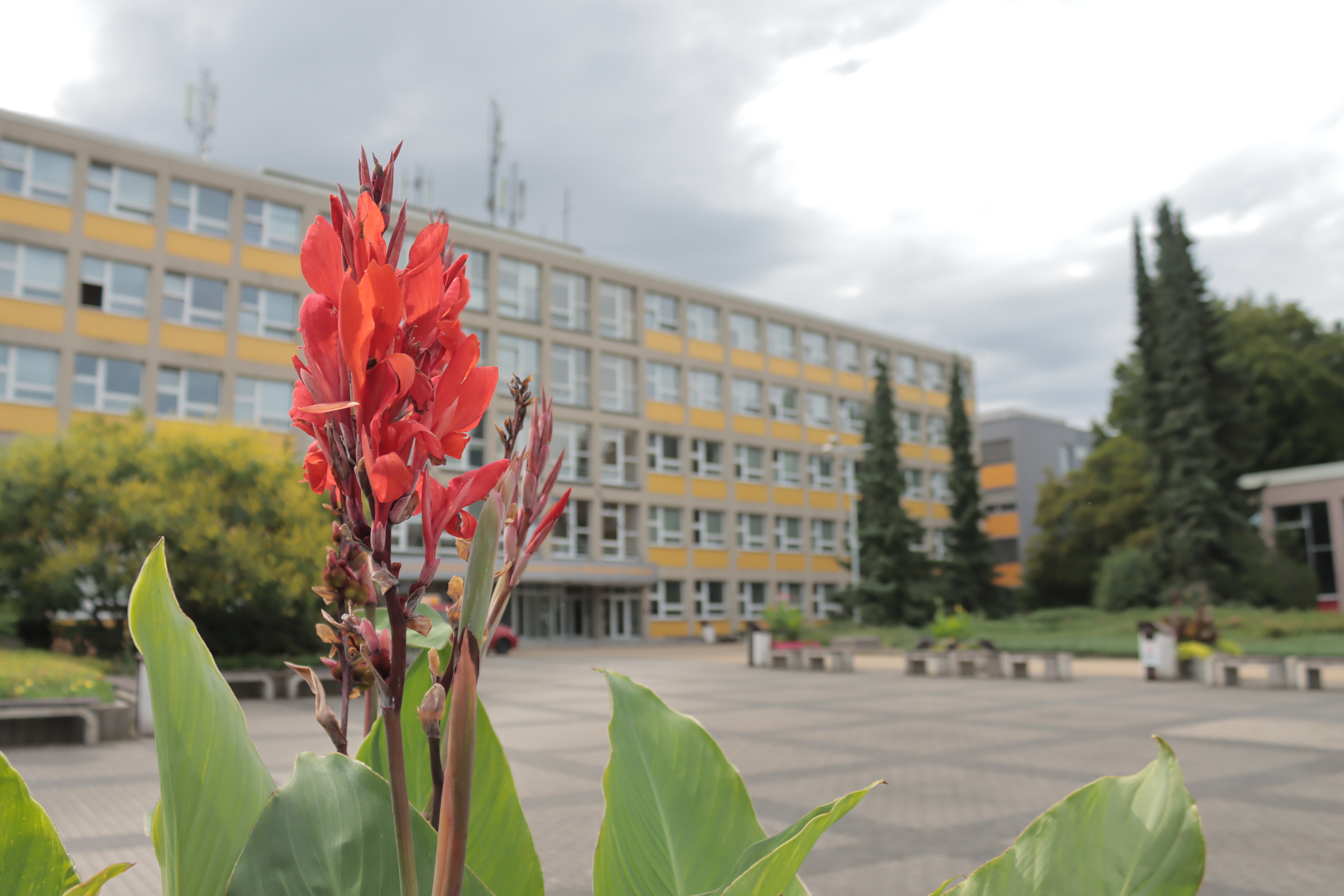
The workshop will take place at the Czech University of Life Sciences Prague (CZU, https://www.czu.cz/en), one of the leading European institutions in the field of life sciences, celebrating its 120th anniversary in 2026. The university is a dynamic centre of innovative research, education, and international collaboration. The campus is located in the green district of Suchdol, in the northwest part of Prague. It offers a pleasant and inspiring environment with beautifully landscaped surroundings that combine academic facilities with open green spaces. The campus also provides excellent amenities, including comfortable dormitories, a variety of dining options, a central library, and several student clubs and recreational facilities, creating a lively and welcoming atmosphere for both work and social interaction.
Accomodation
Participants may opt for on-campus accommodation at the CZU dormitories, which provide a budget-friendly option; however, availability is strictly limited and handled on a first-come, first-served basis. Send the email to sornova@kam.czu.cz or marchenko@kam.czu.cz for booking at dormitory. For those seeking alternative lodging, several hotels and hostels are located near the Dejvická metro station (Line A). This area is approximately 10 minutes from the city centre and is easily accessible from the workshop venue via a 10-minute bus ride.
The following options are available for booking through Booking.com or their official websites:
Recommended accommodation near CZU and Dejvická
| Name | Website | Type |
| Carl Inn | https://carlhotel.cz/en/eng/ | Hotel |
| Masarykova kolej | https://www.suz.cvut.cz/en/hotels-hostels/masaryk-dormitory-hotel | Dormitory/Hotel |
| DAP Hotel | https://www.volareza.cz/hotel-dap/en | Hotel |
| Hotel Meda | https://hotelmeda.cz/en.html | Boutique Hotel |
| Grand Hotel International | https://www.hotelint.cz/en/ |
4-Star Hotel |
| Hostel Dakura | https://hosteldakura.com/ | Hostel |
Costs
The event is supported by EWRS, IWGC, Syngenta Turkey, Corteva Turkey, and HRAC. There is no registration fee. Participants are expected to cover their own travel and accommodation expenses.
Organizers
Local Organizers: Kateřina Hamouzová (email: hamouzova@af.czu.cz) and Pavlína Košnarová (email: kosnarova@af.czu.cz)
Scientific Organizers Team: Kateřina Hamouzová, Roland Beffa, Eric Patterson, Hüsrev Mennan
Traveling to Prague
By plane
Participants will arrive at Terminal 1 or Terminal 2 of Václav Havel Airport Prague. From the airport, you can take a taxi, which takes about 15 minutes to reach Suchdol. Ride-hailing services such as Uber or Bolt are also available (you need to have the app installed on your mobile phone). A taxi typically costs around 500–600 CZK (approximately 20–25 €), while Uber or Bolt are usually cheaper. You can also use public transport to reach the campus.
Public transport from the airport to university campus
Take the trolley bus number 59 from the airport to the final stop, “Nádraží Veleslavín.” The journey takes about 15–20 minutes. Then change to Metro Line A (the green line) in the direction of Depo Hostivař and travel one stop to Dejvická station. At Dejvická, follow the signs to the bus terminal. From there, take bus number 107 or 147 in the direction of Suchdol. Stay on the bus until you reach the stop “Zemědělská univerzita.” The entire journey takes about 45–60 minutes. You can use a single 90-minute public transport ticket (40 CZK) for the whole trip. Don’t forget to validate your ticket inside the vehicle.
By train
If you arrive by train, take Metro Line C (the red line) from the railway station and travel one stop to Muzeum. There, change to Metro Line A (the green line) and continue to Dejvická station. From Dejvická, take bus number 107 or 147 as described above.
By car
Postal Address:
Czech University of Life Sciences Prague (Česká zemědělská univerzita v Praze)
Kamýcká 129
165 00 Praha 6 Suchdol
Czech Republic
Geographical Location:
50.1300103N, 14.3736664E
Travel Grants for early career scientists
To support the participation of early career scientists in the course, financial assistance is offered by the EWRS. Applications should be submitted via e-mail to Kateřina Hamouzová hamouzova@af.czu.cz and Roland Beffa Roland Beffa roland.beffa@t-online.de. Eligible applicants include BSc, MSc and PhD students, as well as researchers under 35 years of age. Selected candidates may receive a partial reimbursement of their travel and accommodation expenses. The maximum reimbursement amount will depend on the total number of applicants and will not exceed €800. Applicants who are not members of EWRS will have the equivalent of the annual membership fee deducted from the grant (€30 for students and €60 for regular members) and will automatically become EWRS members. An individual early career scientist may receive a maximum of three such subsidies overall.
Applications will be assessed by the Working Group Leader Kateřina Hamouzová.
The application must include:
- A brief motivation letter
- A curriculum vitae
- An estimated budget for travel and accommodation
- A confirmation from the home institution stating that it will cover the remaining travel and accommodation costs if the grant is awarded.
Registration and Deadlines
Registration is open via EWRS website.
Deadline for registration 30th September 2026.
Attendance on the workshop is for free.
Abstract submission starts on July 10th and the deadline is October 10th, 2026.
The second circular containing scientific programme and more detailed information on the organisation of the meeting will be issued.
If you run into any trouble, please do not hesitate to contact Local or Scientific Organizers.
Abstract submission guidelines: DOWNLOAD HERE