EWRS-GIRE Workshop: Tackling herbicide resistance through participatory approaches: the 30-year experience of Italian Herbicide Resistance Working Group (GIRE)
Organized by EWRS WG 'Herbicide Resistance' together with GIRE (Italian Herbicide Resistance Working Group)
Padova. Italy, 27th to 29th of January 2027
Extended deadline for abstract submission: 15 November 2026
EWRS-GIRE Workshop
Tackling herbicide resistance through participatory approaches: the 30-year experience of Italian Herbicide Resistance Working Group (GIRE)
Padova, Italy, 27-29 January 2027
The workshop aims to discuss the current and future capability to contrast/prevent/manage herbicide resistance by implementing sustainable management strategies based on the integration of agronomic, mechanical, and/or other non-chemical tools. To achieve the objectives of the workshop, the contributions should include research that describes measures from a perspective of tackling herbicide resistance, highlighting the possible involvement of farmers and third parties. Also, contributions on the development and application of herbicide resistance detection methods are welcome, used from the perspective of herbicide resistance survey in order to implement efficient resistance evolution mitigation strategies.
Different points of view will be considered in the framework of a participatory approach, which includes the collaboration among stakeholders (e.g. farmers, technicians, advisers, agro-chem companies, private and public research, regulatory bodies). As an example of a national group that has been working on this perspective since 1997, GIRE (Italian Herbicide Resistance Working Group) will present its’ thirty years of activity.
At the same time, this will provide the opportunity to organize some small focus groups involving the participants and a final round table to discuss issues and hurdles for weed control over the next ten years.
Venue

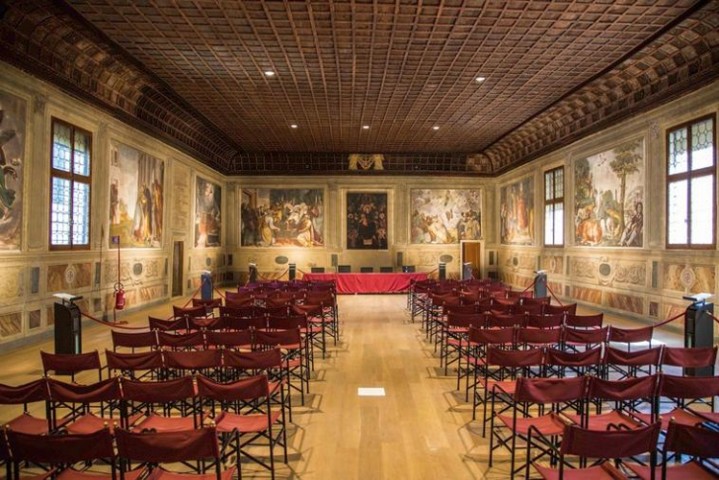
The workshop will be held in Padova, a historic city in north-eastern Italy, known for its rich cultural heritage and vibrant academic life. Home to one of the world’s oldest universities, it blends art, science, and tradition in a unique atmosphere. It is home to UNESCO World Heritage sites, the main one being "Padova Urbs Picta" which includes eight sites with famous 14th-century frescoes by Giotto and other masters. Another is the University Botanical Garden (established in 1545), the oldest in the world in its original location.
The workshop will take place in the center of Padova at “La Scuola della Carità“ https://sanfrancescogrande.it/arte/scuola-della-carita/, located in via San Francesco 118 – 35121 Padova.
Scientific program
The workshop will include:
- An introduction part on herbicide resistance status and perspective curated by representatives of various institutions
- A series of presentations on GIRE history and activities carried out by GIRE’s members, focusing on different cropping systems
- A series of presentations selected from the participants’ abstracts and led by the EWRS Herbicide Resistance Working Group.
- An elevator pitch session (2 to 5 mins presentations) correlated by a poster preparation; those will be selected from the participants’ abstracts and will be available for consultation during the entire workshop
- A discussion by groups on selected topics
- A concluding discussion aiming to select the frame to write a review article, which will be submitted to Weed Research
- A visit to experimental trials of IPSP-CNR on herbicide resistance, with an overview of the early detection method
Preliminary program
3-day Workshop of the EWRS WG "Herbicide Resistance” and Italian Herbicide Resistance WG (GIRE)
- Afternoon of 27 January 2027 (beginning around 2 pm): introduction, organizations and GIRE members' presentations, industry point of view on herbicide resistance status and evolution, overview on the state of herbicide resistance in European countries
- 28 January 2027: EWRS attendees' presentations (cultural visit to be defined and dinner in Padova center)
- Morning of 29 January 2027 (closing around 2 pm): visit to IPSP-CNR facilities, focus groups, and round table
Accommodation
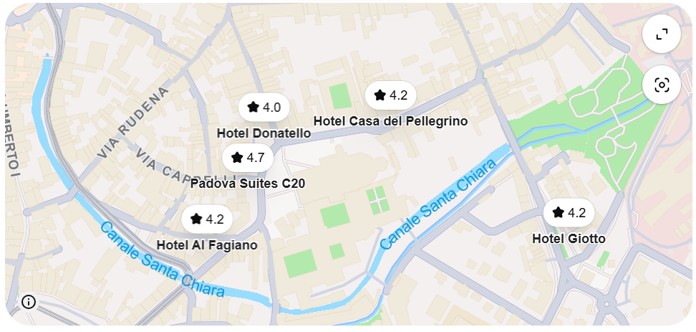
Recommended hotels near the Scuola della Carità:
- Hotel Casa del Pellegrino
Just a few minutes’ walk from the Scuola della Carità, next to the Basilica of Saint Anthony. A practical and convenient choice in the heart of the city.
Website: http://www.casadelpellegrino.com/it/ - Hotel Donatello
Located on Via del Santo, extremely close to the venue. A very central and comfortable option.
Website: https://www.hotel-donatello.net/ - Padova Suites C20
A modern and well-designed property right by the Basilica, ideal for getting around on foot.
Website: https://www.padovasuitesc20.it/ - Hotel Giotto
Slightly farther away (about 5–10 minutes walk), but very well-rated and conveniently located near the city center and main attractions.
Website: https://www.hotelgiotto.com/
Fees and costs
Workshop registration fees are fixed at € 150 for regular attendees, € 100 for students. The planned number of attendees is up to 30.
Registration fees will cover lunches on the second and third day, morning and afternoon refreshments, and the dinner on 28th January; congress materials, including the congress program and the book of abstracts.
Subsidies for junior scientists
To support the participation of early-career scientists in the course, financial assistance is offered by the EWRS. Applications should be submitted via e-mail to Kateřina Hamouzová (hamouzova@af.czu.cz), Roland Beffa (roland.beffa@t-online.de), and Silvia Panozzo (silvia.panozzo@cnr.it). Eligible applicants include BSc, MSc, and PhD students, as well as researchers under age of 35. Selected candidates may receive a partial reimbursement of their travel and accommodation expenses. The maximum reimbursement amount will depend on the total number of applicants and will not exceed € 800. Applicants who are not members of EWRS will have the equivalent of the annual membership fee deducted from the grant (€ 30 for students and € 60 for regular members) and will automatically become EWRS members. An individual early-career scientist may receive a maximum of three such subsidies overall.
Applications will be assessed by the EWRS Herbicide Resistance Working Group Chair and co-chair Kateřina Hamouzová and Roland Beffa.
The application must include:
- A brief motivation letter
- A short curriculum vitae
- An estimated budget for travel and accommodation
- A confirmation from the home institution stating that it will cover the remaining travel and accommodation costs if the grant is awarded.
Successful applicants will be informed in due time. The EWRS does not provide the subsidy in advance. Travel expenses will be reimbursed to subsidiaries by bank transfer after active participation in the workshop. Details on reimbursements and declaration forms will be provided later by the EWRS Treasurer.
Registration
To register for the event, a dedicated page will be open on the EWRS event manager website, where there will be the option also to upload an abstract for a scientific contribution (see key dates below).
People who are not members of the European Weed Research Society may contact local coordinators to inquire about possible participation in this event.
Organizers
Local Coordinator
Dr. Silvia Panozzo
Institute for Sustainable Plant Protection (IPSP)- National Research Council (CNR)
Corso Stati Uniti, 4, 35127 Padova PD, Italy
E-mail: silvia.panozzo@cnr.it
EWRS Herbicide Resistance Working Group
Katerina Hamouzova
Czech University of Agriculture in Prague, Faculty of Agrobiology, Food and Natural Resources, Department of Agroecology and Biometeorology
E-mail: hamouzova@af.czu.cz
Dr. Roland Beffa
Free lance Senior Scientist Consultant, Germany
E-mail: roland.beffa@t-online.de
Local Organizer Committee:
Dr. Silvia Panozzo, IPSP- CNR, silvia.panozzo@cnr.it
Dr. Andrea Milani, IPSP- CNR, andreamilani@cnr.it
Dr. Laura Scarabel, IPSP- CNR, laura.scarabel@cnr.it
Dr. Elda Dushku, IPSP-CNR, elda.dushku@cnr.it
Scientific committee:
Dr. Silvia Panozzo, IPSP- CNR, silvia.panozzo@cnr.it
Dr. Andrea Milani, IPSP- CNR, andreamilani@cnr.it
Dr. Laura Scarabel, IPSP- CNR, laura.scarabel@cnr.it
Dr. Maurizio Sattin, IPSP-CNR, maurizio.sattin@cnr.it
Dr. Katerina Hamouzova, EWRS, hamouzova@af.czu.cz
Dr. Roland Beffa, EWRS, roland.beffa@t-online.de
Travelling to Padova (practical guide)
Padova is easily accessible by air, train and car. The nearest airport is Venice Marco Polo Airport (VCE), about 40 km away, with direct connections to Padua by shuttle bus or train via Venice Mestre. Alternatively, Treviso Airport (TSF) is about 50 km away and also well connected.
Padova is a major railway hub, with frequent high-speed trains (Frecciarossa, Italo) linking it to cities such as Milan, Florence, and Rome. The train station is a 15-minute walk or a short tram/bus ride from the historic center.
If traveling by car, Padova is connected via the A4 (Milan–Venice) and A13 (Bologna–Padova) motorways. Parking in the city center is very limited, so park-and-ride options or nearby garages are recommended.
Deadlines
| 1st June 2026 |
Submission of abstracts (max. 300 words) Registration opens Call for junior scientists' subsidy application issued |
|
NEW deadline: 15th November 2026 |
Deadline for abstract submission |
| 1st of December 2026 |
|
DOWNLOAD the First Circular here.
Abstract submission guidelines
Abstracts must not exceed 300 words, the word count excludes the title, authors’ names, affiliations, institutional addresses, and corresponding author’s e-mail address. The title should be precise and clearly express the content of abstract. All authors must be listed in the abstract submission. The corresponding author must provide: institutional affiliation/address and valid email address. If presenting experimental data, the abstract should briefly include aim/objectives, methodology, results and conclusion.
Abstracts reviewing the occurrence of herbicide-resistant weed species in a respective country or region are also welcome.
Please ensure that the abstract is clear, concise and written in English.
Authors are responsible for the accuracy of the submitted content.