EWRS Workshop in Dijon, 2026
Posted on November 13th, 2026 on 17:51:46 by M. Kolarova
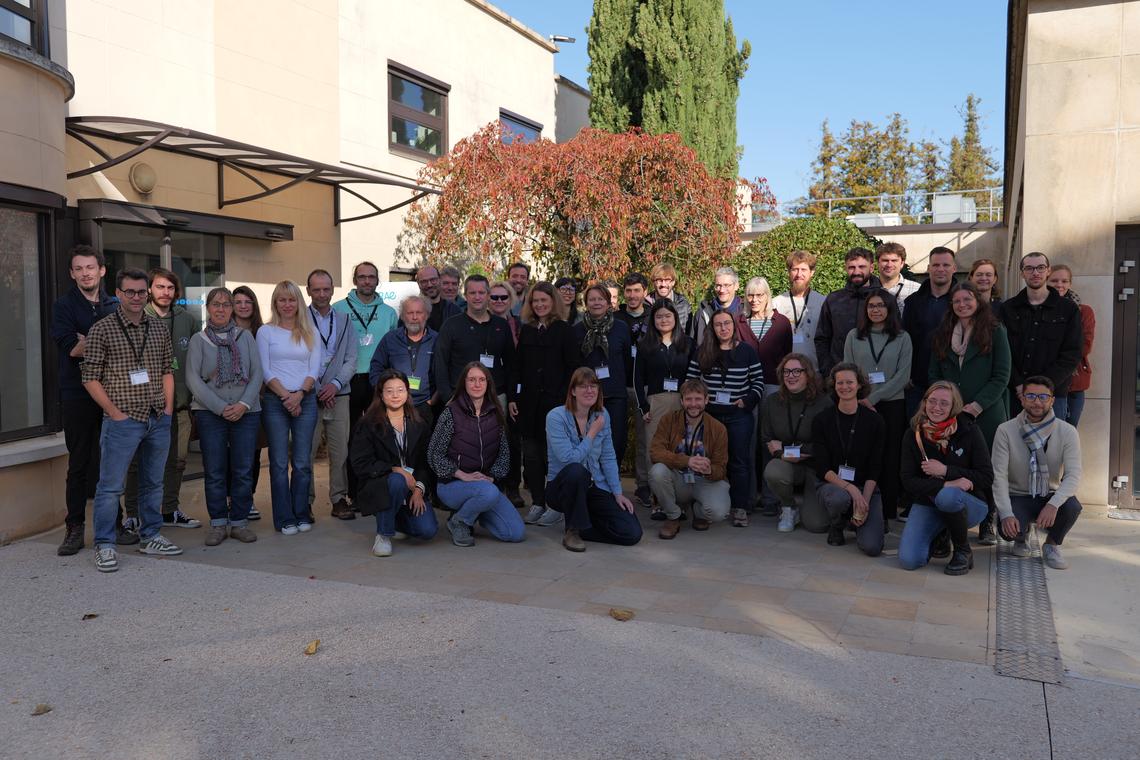
Short report on the joint meeting of the EWRS working groups “Weed Vegetation and Biodiversity” and “Biological Control” on 27–29 October 2026 at INRAE in Dijon, France
The joint meeting of the EWRS working groups 'Weed Vegetation and Biodiversity' and 'Biological Control' took place from 27–29 October 2026 at the INRAE centre in Dijon, France, with a welcome reception at Dijon Métropole on the evening of 26 October. The meeting was funded by EWRS and INRAE and hosted by the Agroécologie research unit, a long-standing centre of weed research in France.
The aim was to share the latest knowledge on the role of weeds in agroecosystems: their benefits and harmfulness, the diversity of weed communities and its response to management, and the use of natural enemies and ecological mechanisms for weed regulation. The meeting brought together scientists from ecology, agronomy, agroecology and biology.
The meeting was organised by the working group coordinators Alexander Menegat (SLU, Sweden), Michaela Kolářová (CZU, Czech Republic), Marion Seier (CABI, UK) and Philip Weyl (CABI, Switzerland), and the local organisers Delphine Moreau and Bruno Chauvel (INRAE, France), with help from Virginie Nowak, Leo Kraus and many volunteers.
Participants
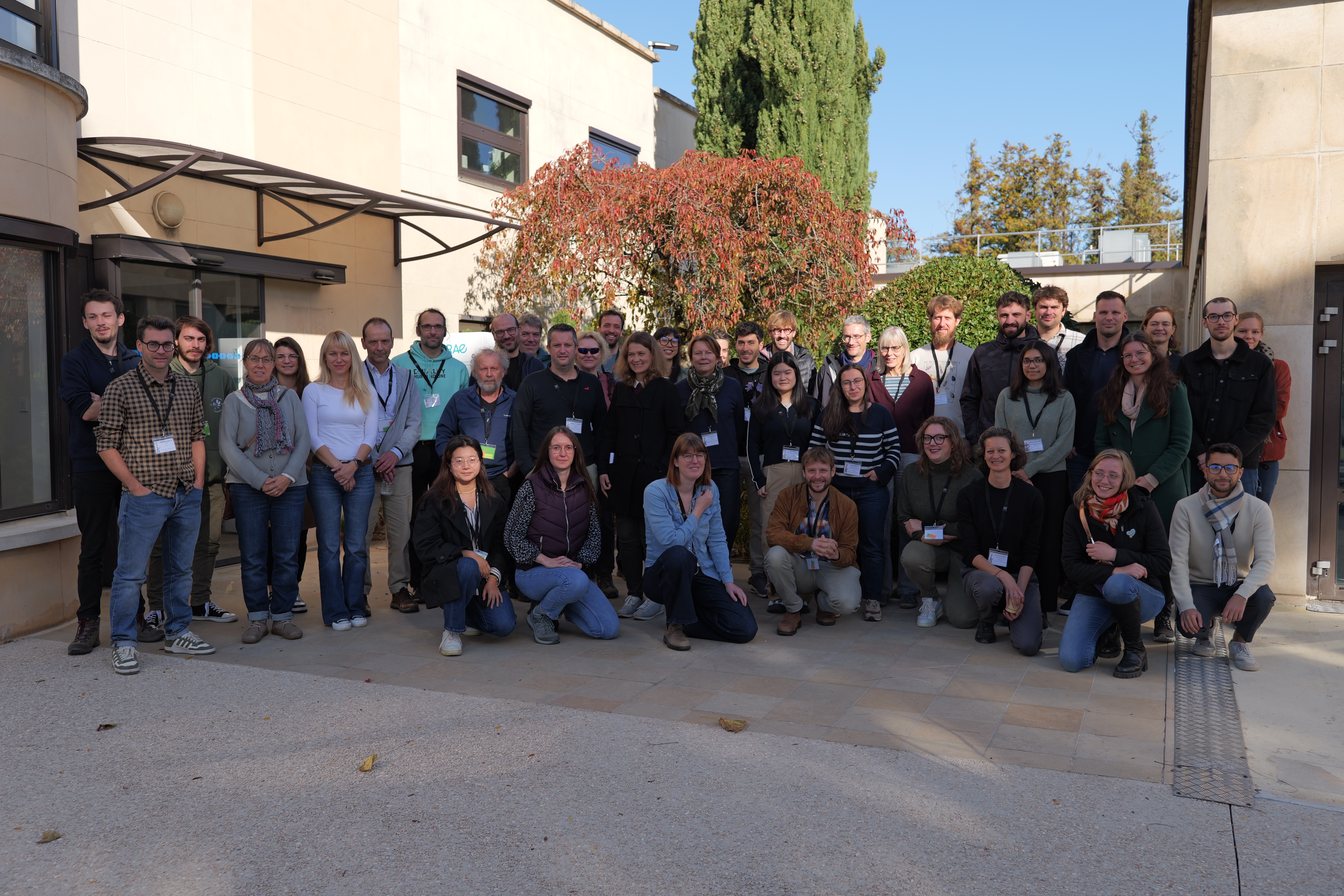
The meeting was attended by 39 participants from 11 countries, including one African country. Eleven participants were students, and four young researchers received travel grants. Fifteen participants came from Dijon.
Programme
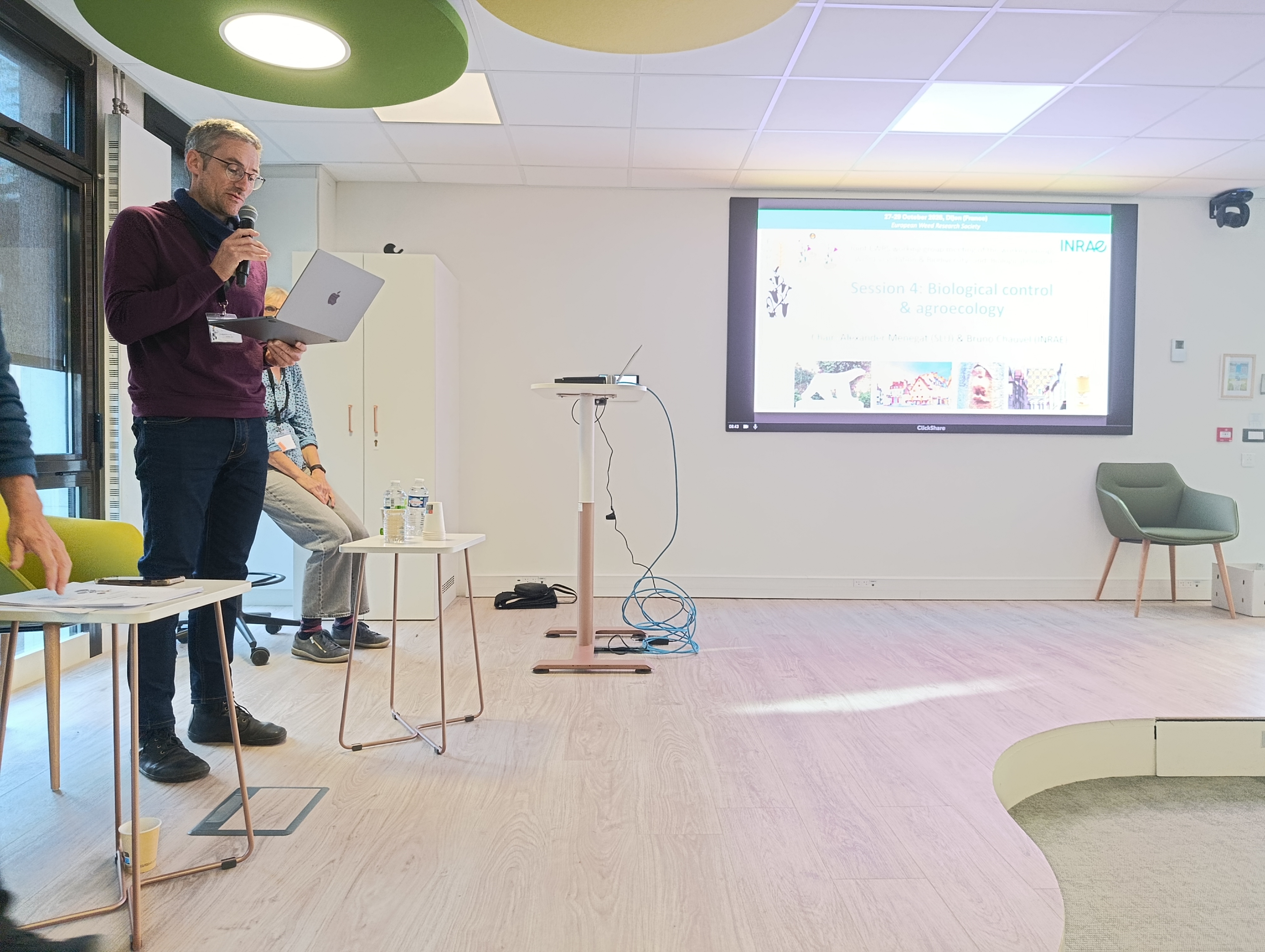
The scientific programme included 2 keynote lectures, 17 oral presentations and 16 posters, presented in four sessions:
- Biodiversity – keynote by Guillaume Fried (Anses, Montpellier) on an ecologist's perspective on arable weed communities, followed by five talks on weed diversity in different crops, regions and farming systems.
- Agroecology – three talks on strip cropping, soil cover in orchards and herbicide reduction in conservation agriculture, followed by flash poster presentations and the first poster session.
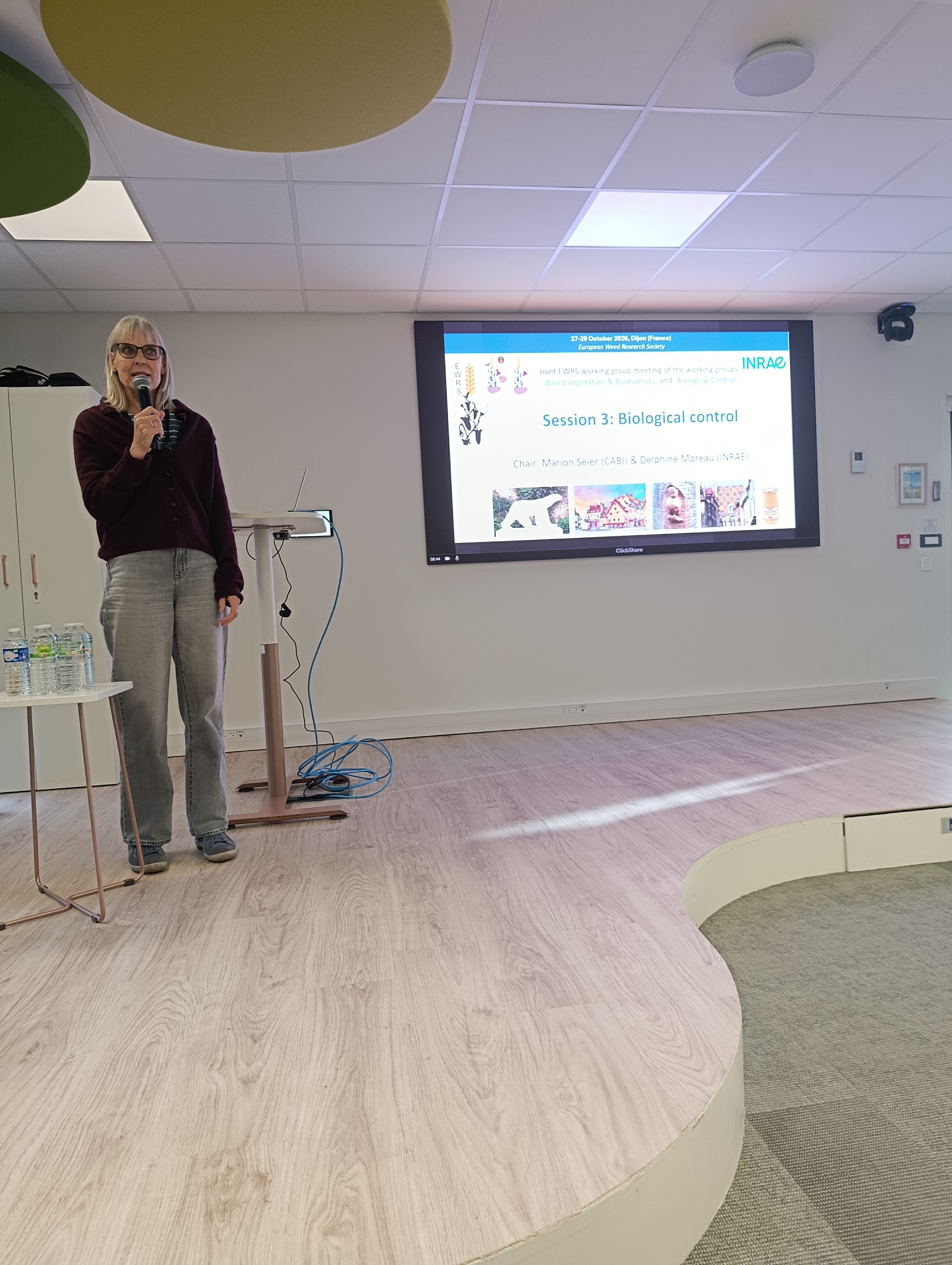
- Biological control – keynote by Vincent Lesieur (INRAE, Sophia Antipolis) on classical biological control of invasive plants in France, and talks on weed seed predation and on identifying targets for classical biological control in Europe.
- Biological control and agroecology – four talks on weeds as targets and promoters of biological control, weed competition, seed removal and a Bayesian network model for agroecological weed management.
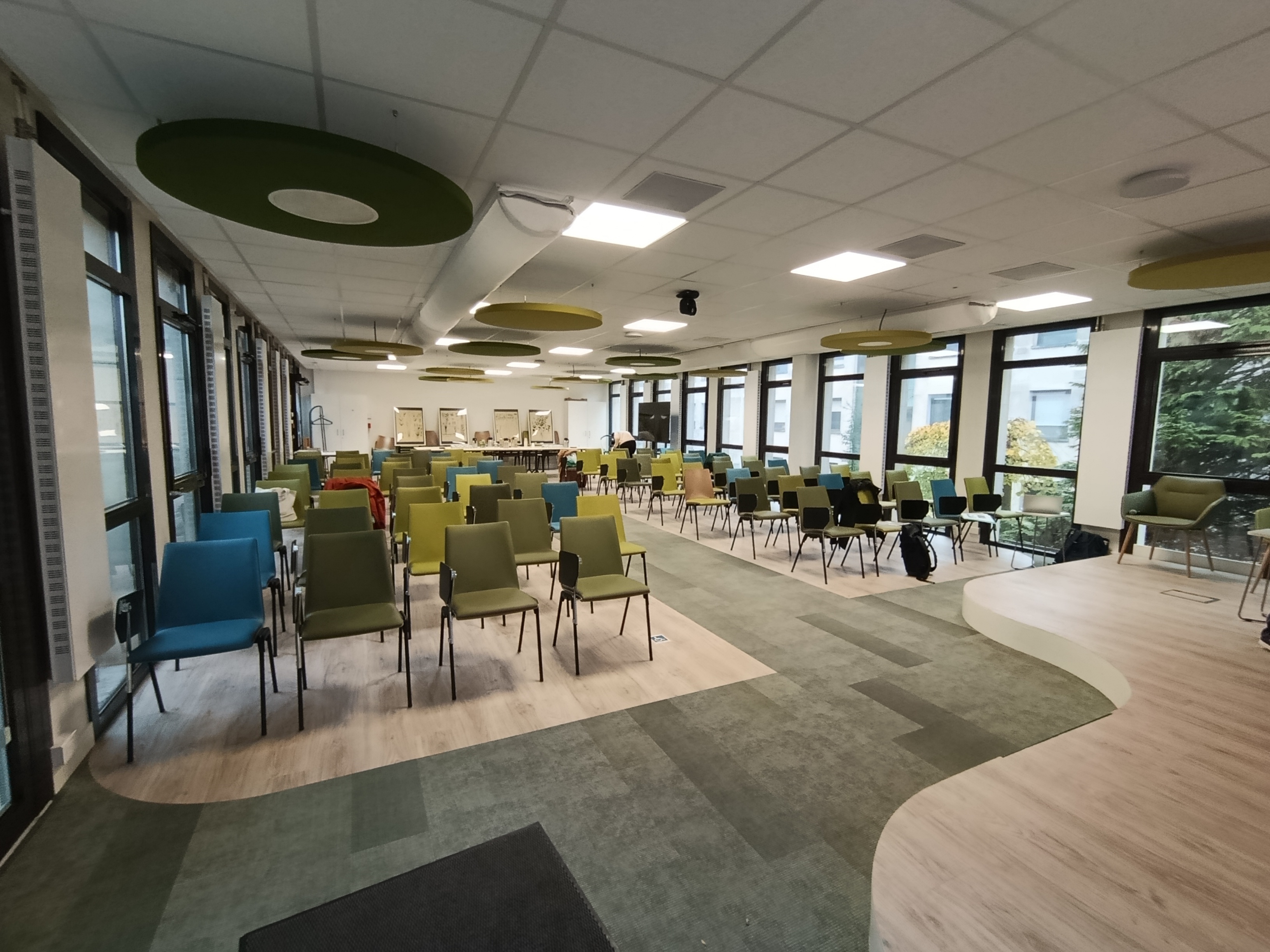
Two round tables complemented the sessions. The first discussed PhD topics on weed communities and how to make them more attractive to students. The second explored how weed vegetation, biodiversity and biological control are positioned in the research agendas of different institutes, and where the two working groups can find synergies.
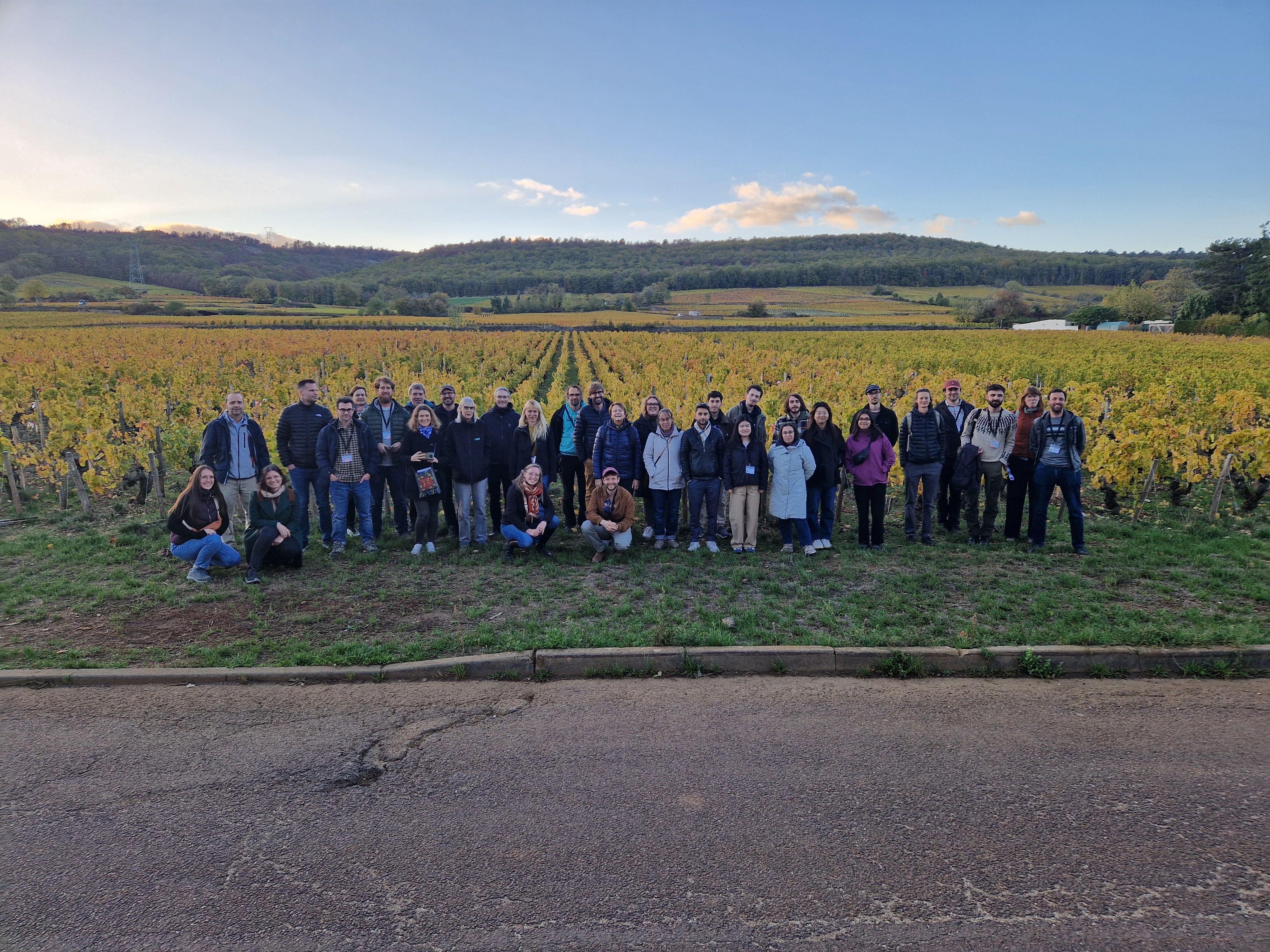
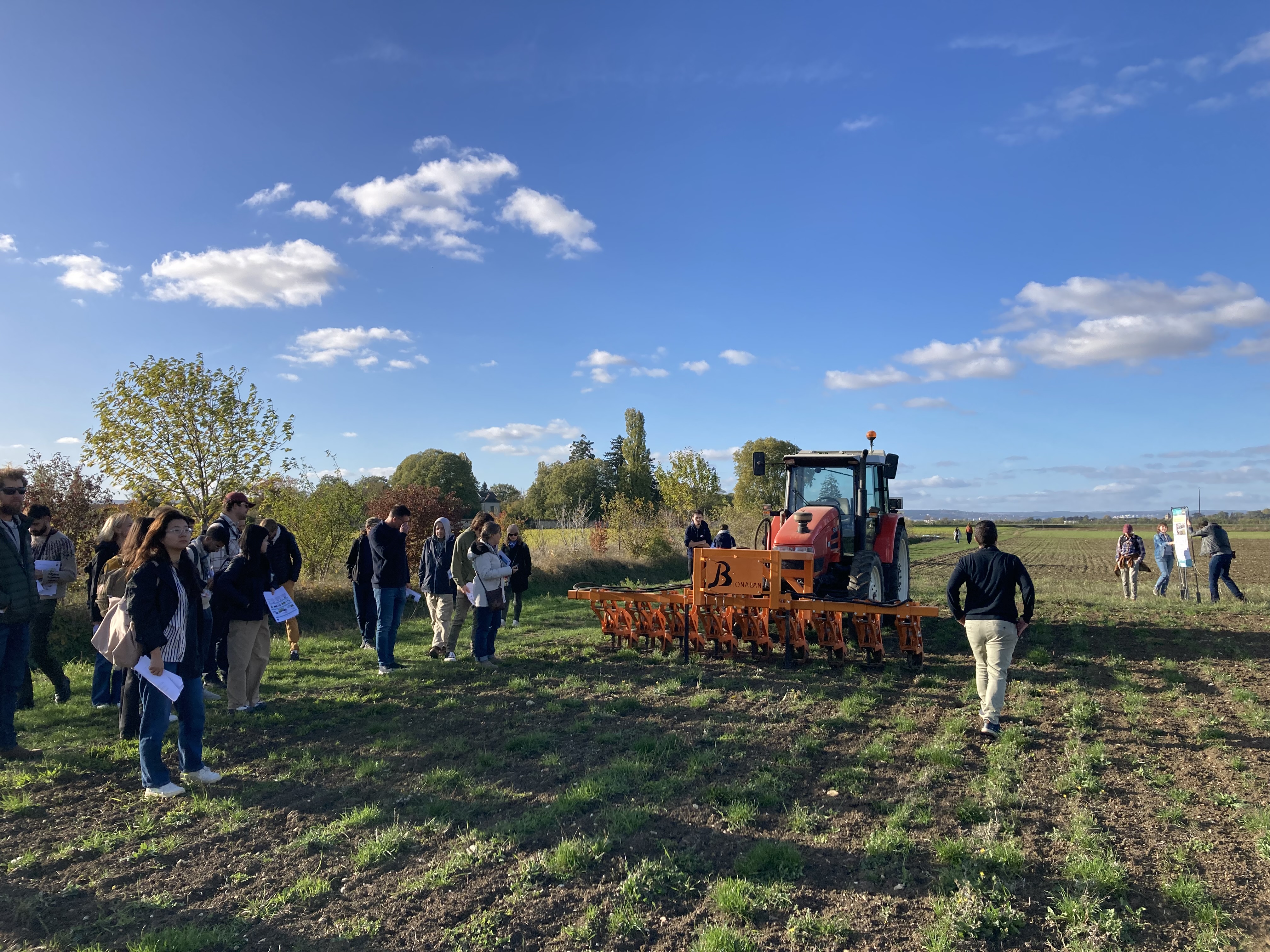
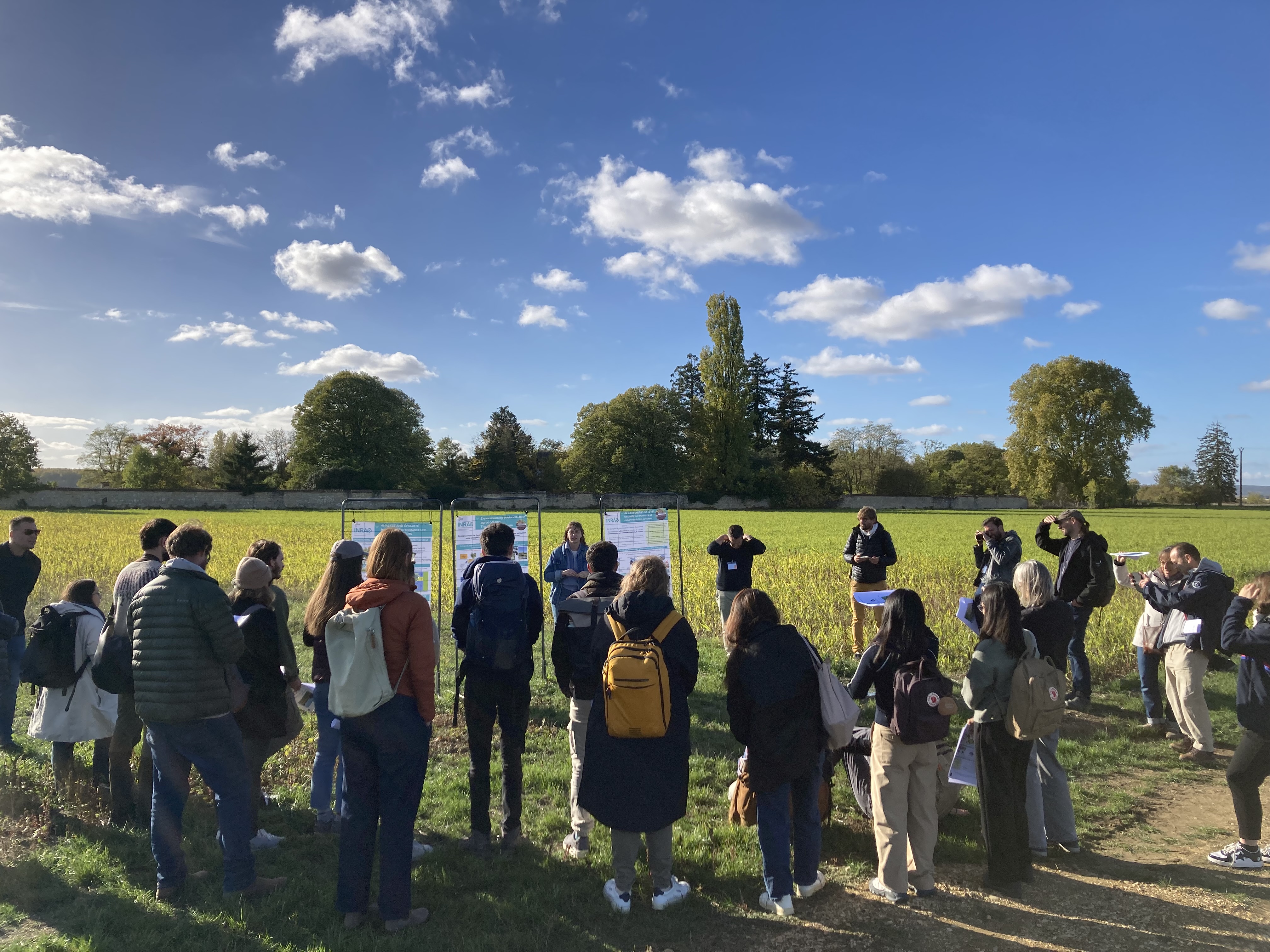
On 28 October, participants visited the CA-SYS experimental platform, where pesticide-free conservation agriculture systems are studied, followed by a cultural visit to the Château de Marsannay.
Conclusion
The joint format brought the two working groups together and showed how closely their topics are linked, especially with respect to weed diversity, seed predation and ecological weed regulation. The strong participation of students and young researchers was very encouraging. We warmly thank INRAE Dijon, the local organisers, the volunteers and EWRS for their support.
12 x viewed | 0 Likes -
Message to the author

Filter by theme
Filter by Working Group
How can I submit a post?
We would like to welcome you as a contributing author for the EWRS blog. Please contact the Communication Officer, Camilla Moonen. She can give you writing access to the blog. After that, you can start writing articles for the blog, from the 'My Account page'. More information can be found on the "How to use the Blog page".