EWRS Bilateral Grant Report - Fanny Defant
Posted on March 23rd, 2026 on 14:57:47 by Aleksandra Savić
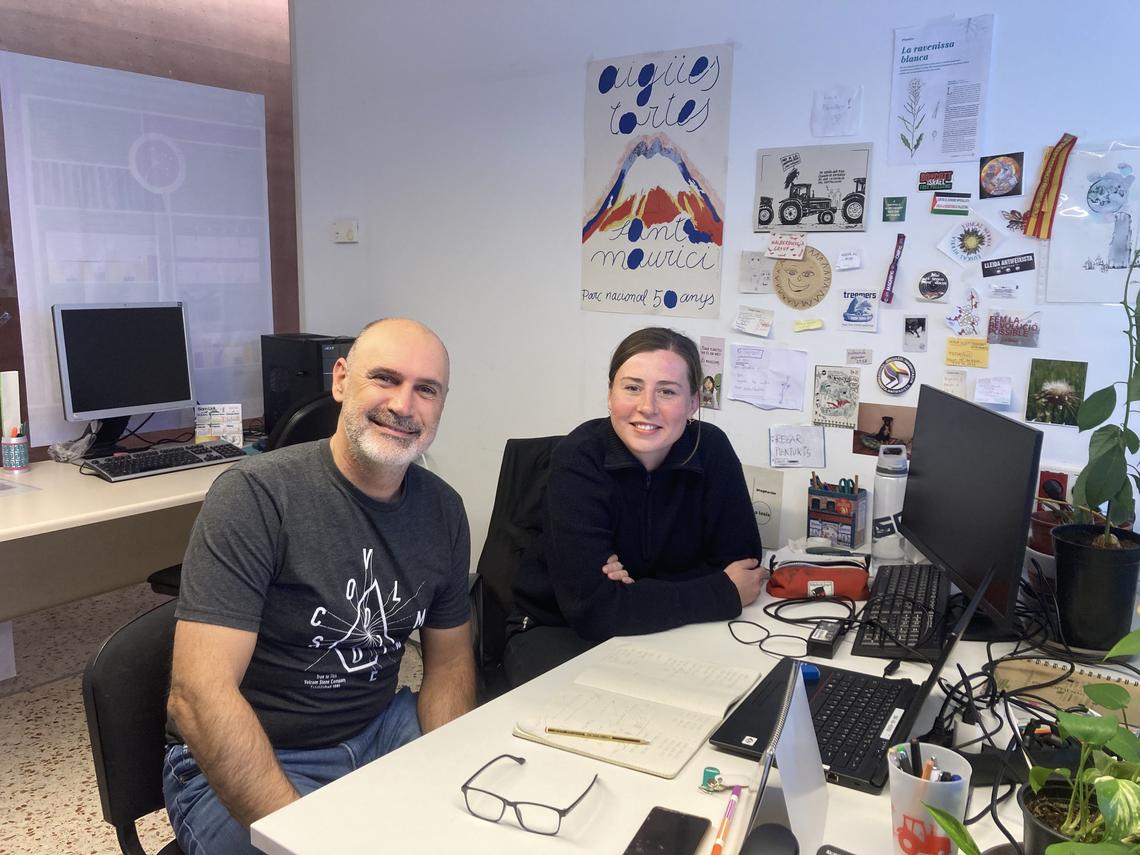
Report on the outcomes of a Scientific Mission EWRS travel grants for bilateral cooperation 2025
Grantee name: Fanny Christine Defant
Home institution: Julius Kuehn Institute, Germany
Mentor (home institution): Dr. Lena Ulber
Host institution: University Lleida, Catalonia (Spain)
Mentor (host institution): Dr. Aritz Royo-Esnal
Details of the EWRS travel grant
Title of project: Impact of temperature on germination of Sonchus arvensis and Sonchus oleraceus and two Sonchus genus hybrids
Start and end date: 03/11/2025 to 28/11/2025
Introduce your project 's general subject or topic (short paragraph)
Sonchus arvensis L. (perennial sow-thistle) is a perennial weed in the Asteraceae family. The yellow flowering plant reproduces both generatively via seeds and vegetatively through creeping roots, employing two strategies to establish itself in agricultural fields. Research on the biology and ecology of S. arvensis has mainly focused on its vegetative reproduction system while the germination behaviour of the seeds has been studied to a lesser extent. The few studies that have investigated the germination behavior of S. arvensis, most of which were conducted more than 50 years ago, identified optimal temperatures between 25 °C and 30 °C, which is unexpected given that this species primarily occurs as a problematic weed in Northern Europe. The occurrence of S. arvensis decreases with increasing southern latitude. In Lleida, Catalonia (Spain), the annual species Sonchus asper L., Sonchus oleraceus L. and Sonchus tenerrimus L. are widespread, whereas S. arvensis is absent. Especially among the annual species, interspecific hybridization appears to play an important role, which is often reflected in the phenotypes of the plants.
Clearly state your project 's objectives (short paragraph)
The main objective of this bi-lateral cooperation is to determine the base and optimal temperature conditions for the germination of S. arvensis and S. oleraceus from different European populations and seeds from two hybrid looking plants: S. oleraceus x S. tenerrismus seeds from Lleida, and S. oleraceus x S. asper seeds from Braunschweig, Germany.
Description of the work carried out during the EWRS travel grant
In Lleida, I had the opportunity to engage extensively with the methodology of germination tests. The work involved not only conducting experiments, but also learning how to analyse and interpret weed germination data. Prior to my arrival in Lleida, I collected seeds from various Sonchus genus originating from 11 sites, which allowed me to begin the experiments immediately after arrival.
The experiment was divided into two germination assays conducted in climate chambers under different temperature conditions. In assay 1, germination was tested at four constant temperatures: 21 °C, 24 °C, 27 °C, and 30 °C. In assay 2, germination was assessed under alternating day/night temperature regimes, with an average temperature of 24 °C across all treatments (26/22°C; 28/20°C; 30/18°C; 32/16°C). A photoperiod of 12 hours light and 12 hours darkness was applied in both germination assays.
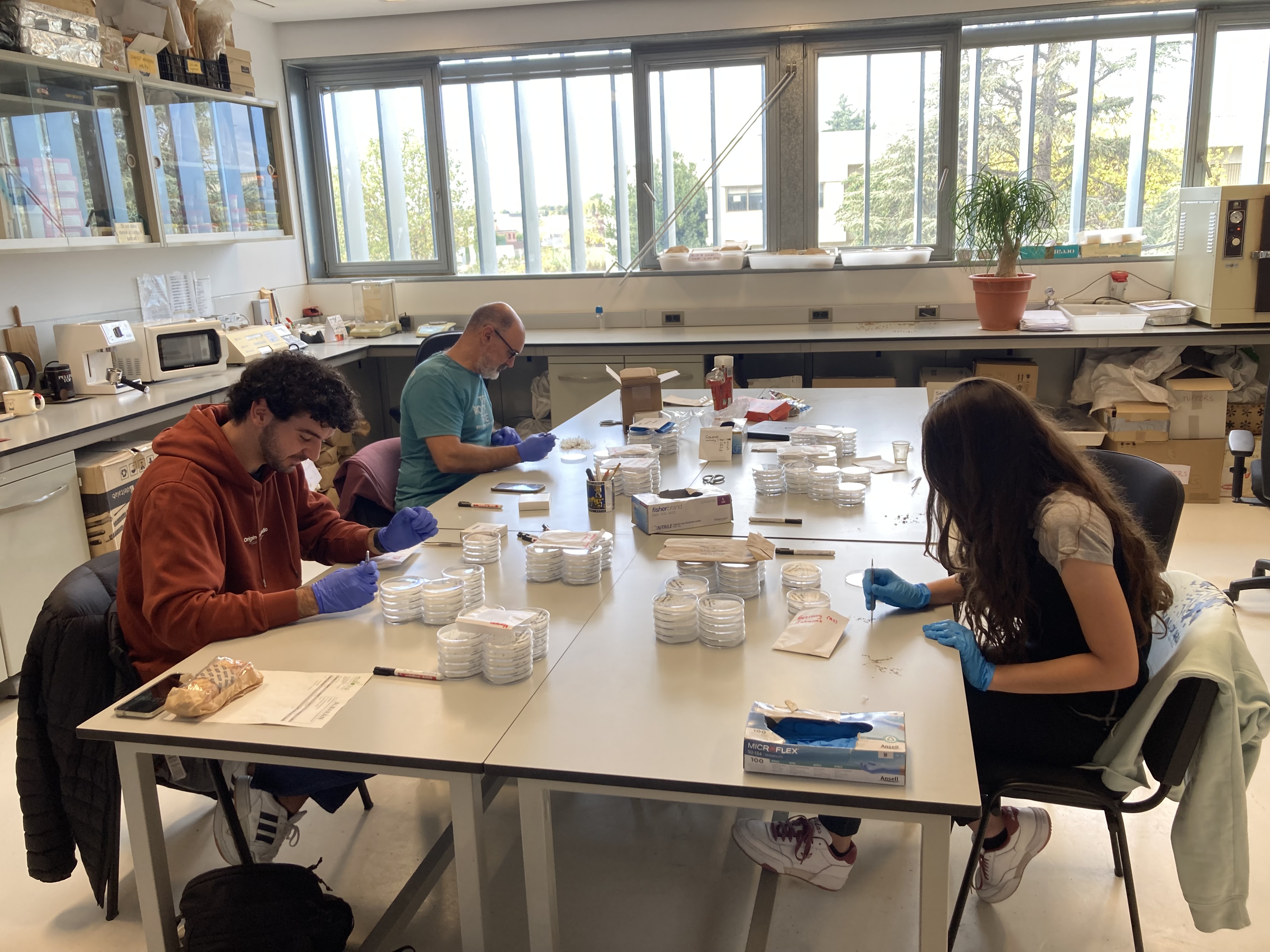
For all germination assays, 20 seeds from each population were placed in 9-cm Petri dishes lined with a single layer of No. 1 filter paper and moistened with distilled water. Five replicates were conducted for each population, species, and temperature regime, following a completely randomized experimental design.
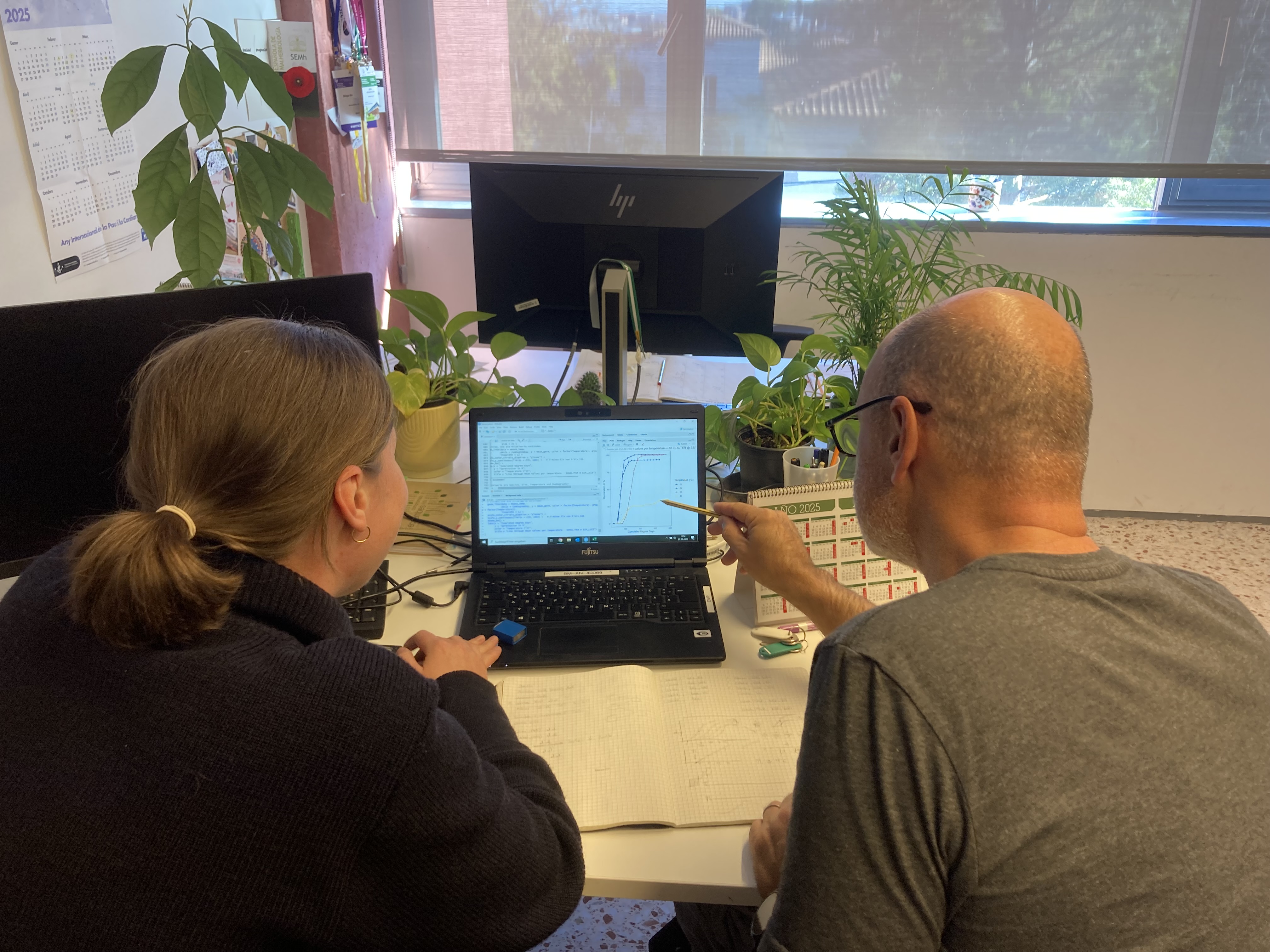
My daily tasks included counting of the germinated seeds and watering them when necessary. We initially conducted the first assay, and after its completion, we proceeded with the second assay. After my stay ended, Aritz Royo-Esnal and his team kindly continued the daily monitoring and seed counting from the second germination assay. In addition, Aritz showed me the wide range of statistical analyses that can be performed using germination tests. Because new data were collected on a daily basis, we were able to monitor the progression of germination in real time, which made the work particularly engaging.
Description of the main achievements
Our results provide new insights into the germination behaviour of S. arvensis, S. oleraceus, and two hybrid forms. Furthermore, comparisons among populations from different European sites were conducted within each species, allowing for an evaluation of species-specific responses across varying environmental conditions. The generated data are suitable for submission as a short communication and will contribute to a manuscript currently in preparation as part of my doctoral research.
Specify precisely your contribution through the research exchange and what knowledge and skills you acquired
The research stay at the University of Lleida under the supervision of Aritz Royo Esnal was highly rewarding and provided valuable insights for my PhD research. An important aspect concerning the environmental conditions influencing the seeds of the perennial weed S. arvensis was investigated, providing valuable insights into the factors affecting its establishment. Investigating S. oleraceus and two hybrids and its adaptive traits enabled comparisons between closely related species. The comparison of multiple sites offered a comprehensive understanding of the species’ adaptive capacity across different environmental conditions. However, it was not only the scientific insights that made this research stay so rewarding, but also the enriching personal exchange I experienced in Lleida. I learned a great deal during my time there and always felt warmly welcomed and well supported. The team proved to be exceptionally generous and supportive hosts.
I would therefore like to express my sincere gratitude to Aritz Royo Esnal, as well as to the entire team, for their outstanding support and hospitality throughout my research stay.
559 x viewed | 12 Likes -
Message to the author

Filter by theme
Filter by Working Group
How can I submit a post?
We would like to welcome you as a contributing author for the EWRS blog. Please contact the Communication Officer, Camilla Moonen. She can give you writing access to the blog. After that, you can start writing articles for the blog, from the 'My Account page'. More information can be found on the "How to use the Blog page".